
How to Sell Academic Materials as a Student
How to Sell Academic Materials as a Student in Nigeria
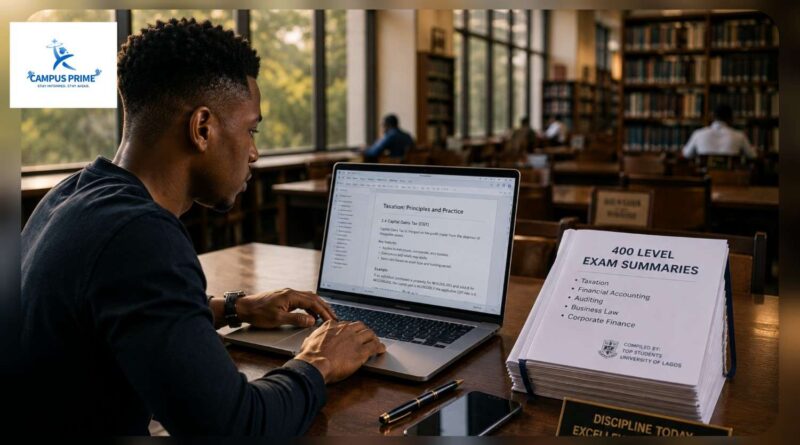
If you know how to sell academic materials, you can turn well-organized study resources into a small campus business while helping other students prepare for tests and examinations. The key is to create useful materials that are accurate, original, affordable, and easy to understand. This guide explains how students can create, price, market, and distribute academic materials without compromising their studies or copying protected content.
Academic materials can include revision notes, course summaries, study guides, practice questions, flashcards, formula sheets, and other resources created from your own understanding of a course. Before selling anything, however, check your institution’s rules and make sure you have permission to use any material that belongs to a lecturer, publisher, examination body, or another creator.
Students who want to develop additional digital skills can also explore freelance skills for students and other legitimate ways to earn while studying. For students looking to improve their digital skills, Google Digital Skills for Africa is another useful learning resource.
What Academic Materials Can Students Sell?
The most useful products are usually materials that solve a specific study problem. Instead of trying to create a large collection covering every subject, start with one course or topic that you understand well.
- Course summaries: Short explanations of major topics covered during lectures.
- Revision guides: Structured notes designed for students preparing for tests or examinations.
- Practice questions: Original questions created to help students test their understanding.
- Flashcards: Short question-and-answer materials for definitions, formulas, dates, and key concepts.
- Formula sheets: Concise collections of formulas and explanations for relevant science, technology, engineering, or mathematics courses.
- Study planners: Revision schedules that help students organize their preparation before examinations.
A useful academic product does not need to be hundreds of pages long. A concise guide that explains difficult topics clearly can be more valuable to a student than a long document filled with copied material.
Choose a Course You Understand
Your first product should ideally be based on a subject you have studied yourself. This makes it easier to identify topics students commonly struggle with and explain them in your own words.
For example, if students in your department frequently find a particular 100-level course difficult, you could create a revision guide covering its major concepts, definitions, worked examples, and original practice questions.
Before publishing the material, compare your notes with the official course outline, recommended texts, and other reliable academic sources. Do not assume that information is correct simply because it appears in an old handout or online document.
For students who are still preparing for university admission, CampusPrime also provides an admission guide covering JAMB, NECO, and Post-UTME processes.
How to Create Academic Materials That Students Will Actually Use
The value of a study guide comes from how well it helps someone understand a subject. Avoid simply copying lecture notes into a PDF. Instead, reorganize the information into a format that makes revision easier.
Start With the Course Outline
List the major topics students are expected to understand. Arrange your material in the same logical order as the course rather than mixing unrelated subjects together.
Explain Difficult Concepts in Simple Language
When a topic is complicated, break it into smaller sections. Define unfamiliar terms before using them and include simple examples where appropriate.
Add Original Practice Questions
Practice questions can make a study guide considerably more useful. Create your own questions based on the concepts you have explained and provide answers or brief explanations where appropriate.
If you use publicly available examination questions, identify their source and make sure your intended use is permitted. Do not present another person’s copyrighted material as your own.
Check Your Facts
A single incorrect formula, definition, calculation, or answer can reduce the usefulness of an entire study guide. Review technical information carefully before distributing your material.
How to Format Your Study Guide
A professional-looking document does not require expensive software. The important thing is that students can read and navigate it easily on a phone, tablet, or computer.
Use clear headings, short paragraphs, consistent fonts, adequate spacing, and descriptive section titles. For longer documents, add a table of contents so students can quickly locate the topic they need.
Where appropriate, use tables to compare concepts or summarize information. Mathematical formulas, diagrams, and examples should be large enough to remain readable on a smartphone.
Before selling a PDF, open the final file on your own phone. Check every page for missing text, distorted tables, broken images, spelling errors, and pages that are difficult to read.
How to Price Academic Materials
Your price should reflect the amount of work involved while remaining realistic for your target students. A short revision sheet should not necessarily cost the same as a comprehensive course guide containing several topics and original practice exercises.
Consider the following when setting a price:
- The length and quality of the material.
- The amount of original research and preparation involved.
- Whether the material includes practice questions or additional resources.
- Printing and production costs for physical copies.
- The purchasing power of the students you are targeting.
- Whether you are offering an individual guide or a bundle covering several topics.
It is better to start with a reasonable price and build trust through quality than to charge a high amount for a poorly prepared document.
How to Market Your Academic Materials on Campus
You do not need an expensive advertising campaign to test whether students are interested in your material. Start with the people who are most likely to need it.
Class groups, departmental communities, student associations, and trusted classmates can help you understand what students actually need. However, follow the rules of each group and avoid repeatedly posting promotional messages where advertising is not permitted.
A simple sample can also help potential buyers judge the quality of your work. Instead of giving away the entire product, consider providing a few representative pages showing the structure, writing quality, and type of explanations included.
For digital promotion, students can also develop social media management skills. Our guide on managing social media brands and local student gigs provides additional ideas for building digital services around campus.
Use Timing to Increase Demand
Students are more likely to look for revision materials when tests, continuous assessments, practical examinations, or final examinations are approaching. That makes timing an important part of your sales strategy.
Instead of waiting until the night before an examination, prepare your materials early. Give yourself enough time to correct mistakes and allow students to use the resources for revision.
You can also create separate products for different stages of preparation. For example, a short revision sheet may be useful before a test, while a more detailed course guide can serve students preparing for final examinations.
Digital or Printed Academic Materials: Which Is Better?
Both formats can work, depending on your audience and the type of material you are producing.
| Format | Advantages | Considerations |
|---|---|---|
| Easy to distribute and does not require printing for every buyer. | Some students may prefer physical copies or have limited access to devices. | |
| Printed booklet | Convenient for students who prefer reading on paper. | Requires printing, binding, storage, and physical distribution. |
| Both formats | Gives buyers a choice based on their preference. | Requires more planning and may increase production costs. |
If you are starting with limited funds, testing a digital version can help you determine whether students actually want the material before spending money on large-scale printing.
Important Copyright and Academic Integrity Rules
Selling academic materials does not give you permission to copy whatever you find online or inside a lecturer’s course materials. Your safest approach is to create original explanations based on your own understanding and use legitimate sources for research.
- Do not copy textbooks word-for-word: Write explanations in your own words and cite sources where appropriate.
- Do not reproduce protected lecture materials without permission: Ask for permission when the material belongs to someone else.
- Do not sell examination questions as your own work: Clearly identify legitimate sources and respect applicable usage restrictions.
- Do not sell completed assignments as if they were study resources: Your material should support learning rather than encourage academic dishonesty.
- Do not guarantee examination success: A study guide can support preparation, but it cannot guarantee a particular grade or admission outcome.
For broader guidance on responsible academic work and the use of technology in education, students can also read our guide on using AI for academic work responsibly.
How to Protect Your Own Academic Performance
A campus business should support your education rather than replace it. If creating study guides begins to interfere with lectures, assignments, revision, or sleep, reduce the number of products you are producing.
A practical approach is to create your materials during periods when your academic workload is manageable. Keep track of the time spent researching, writing, formatting, answering customer questions, and handling deliveries. This helps you determine whether the business is actually worth the effort.
Remember that your own academic performance is also part of your reputation. Students are more likely to trust your study materials when they see that you understand the subject and take academic work seriously.
How to Keep Records of Your Student Business
Even a small campus business benefits from basic record keeping. Keep a simple record of sales, production costs, printing expenses, refunds, and outstanding payments.
For example, if you sell a printed study guide for ₦1,000 but spend ₦600 on printing and binding, your gross margin before other expenses is ₦400. Tracking these figures prevents you from confusing sales revenue with actual profit.
Digital records can also help you identify which materials are worth updating or producing again for another academic session.
Common Mistakes Students Should Avoid
- Creating a guide without first confirming that students need it.
- Copying lecture notes or textbooks instead of creating original explanations.
- Publishing materials without checking factual accuracy.
- Making PDFs that are difficult to read on mobile devices.
- Setting prices without calculating production costs.
- Promoting aggressively in student groups where advertising is not allowed.
- Allowing the business to interfere with personal studies.
- Promising grades, examination questions, or guaranteed academic results.
Frequently Asked Questions
Is selling academic materials a good student business?
It can be a practical small business if you create genuinely useful and original resources. Demand will depend on the course, student population, quality of your material, and your ability to market it responsibly.
What academic materials can I sell?
You can create revision guides, original practice questions, course summaries, flashcards, formula sheets, study planners, and other educational resources, provided that your content is original or you have the necessary permission to use third-party material.
Can I sell my lecturer’s notes?
You should not assume that you have the right to reproduce or sell a lecturer’s notes, slides, textbook extracts, or other protected material. If the material belongs to someone else, obtain appropriate permission before distributing it commercially.
Should I sell PDF or printed materials?
Either format can work. PDFs are generally easier to distribute, while printed materials may be more convenient for students who prefer physical copies. You can test demand before investing heavily in printing.
How much should I charge for academic materials?
There is no universal price. Consider the quality and length of the material, your production costs, the purchasing power of your target students, and the value the guide provides.
Can I sell materials from previous academic sessions?
You can update useful study resources for a new session, but review the content first. Course outlines, lecturers, examination formats, recommended texts, and other academic requirements can change.
Final Thoughts
Selling academic materials can become a useful student side business when it is built around genuine academic value rather than copied content. Start with a course you understand, identify a real study problem, create an original solution, check the information carefully, and price the finished product fairly.
Most importantly, protect your academic reputation. Do not sell copied materials, facilitate cheating, or allow the business to interfere with your own education. A small student venture becomes much more sustainable when customers trust the quality of what they are buying.
Students interested in other legitimate ways to earn while studying can explore our guide to business ideas for students in Nigeria.
For more student, admission, and education updates, visit the CampusPrime homepage.
Editorial note: This article provides general educational and business information for students. Always check your institution’s rules and applicable copyright requirements before creating or selling academic materials.
The CampusPrime Update
Join thousands of students getting the latest verified university news, Post-UTME forms, scholarship opportunities, and admission guides straight to their inbox.
✨ 100% Free. No spam, ever.